by Brad Heringer and Mariana Abdala
Thanksgiving launches on the same day every year, yet the team misses its estimates with astonishing consistency. The turkey is rarely on schedule, the starters go live prematurely, and at least one stakeholder claims they were never included in planning. If this were a real product initiative, the retro would require a trained facilitator and emotional support snacks. This year, PAS took a closer look to understand the “what” and the “why” behind the annual Turkey Day GTM throwdown.
The accidental org chart
Grandma serves as the Executive Sponsor. She owns the vision, guards tradition, and provides strong opinions with limited context. She contributes no deliverables but all of the expectations.
The host becomes the Product Manager, responsible for alignment, timeline, and keeping the project from collapsing under the weight of unnecessary side dishes and poor seating choices.
Engineering is whoever is cooking the turkey, fighting technical debt in the form of an oven from the late 1990s.
The sibling in charge of table décor represents Design, fully invested in aesthetics while neglecting budget constraints.
QA is the retired parent who points out flaws loudly and in real-time.
Sales is the optimist insisting the new sweet potato recipe is a winning feature. Remind me who invited you?
Data is the health‑conscious aunt who presents evidence no one asked for.
Thanksgiving’s KPIs
Total Appetite Satisfaction Score (TASS), although a lagging indicator, gauges how likely your guests are to recommend your house for future Thanksgiving dinners based on how stuffed and satiated they felt consistently throughout the event.
The Plate Efficiency Score (PES) measures surface‑area optimization under limited capacity.
The Leftover Conversion Rate (LOCR) determines whether cold turkey becomes sandwiches, soup, or an overconfident experiment that should never have been greenlit.
Family Drama Index (FDPM) measures volatility, and becomes volatile once football or politics enter the sprint.
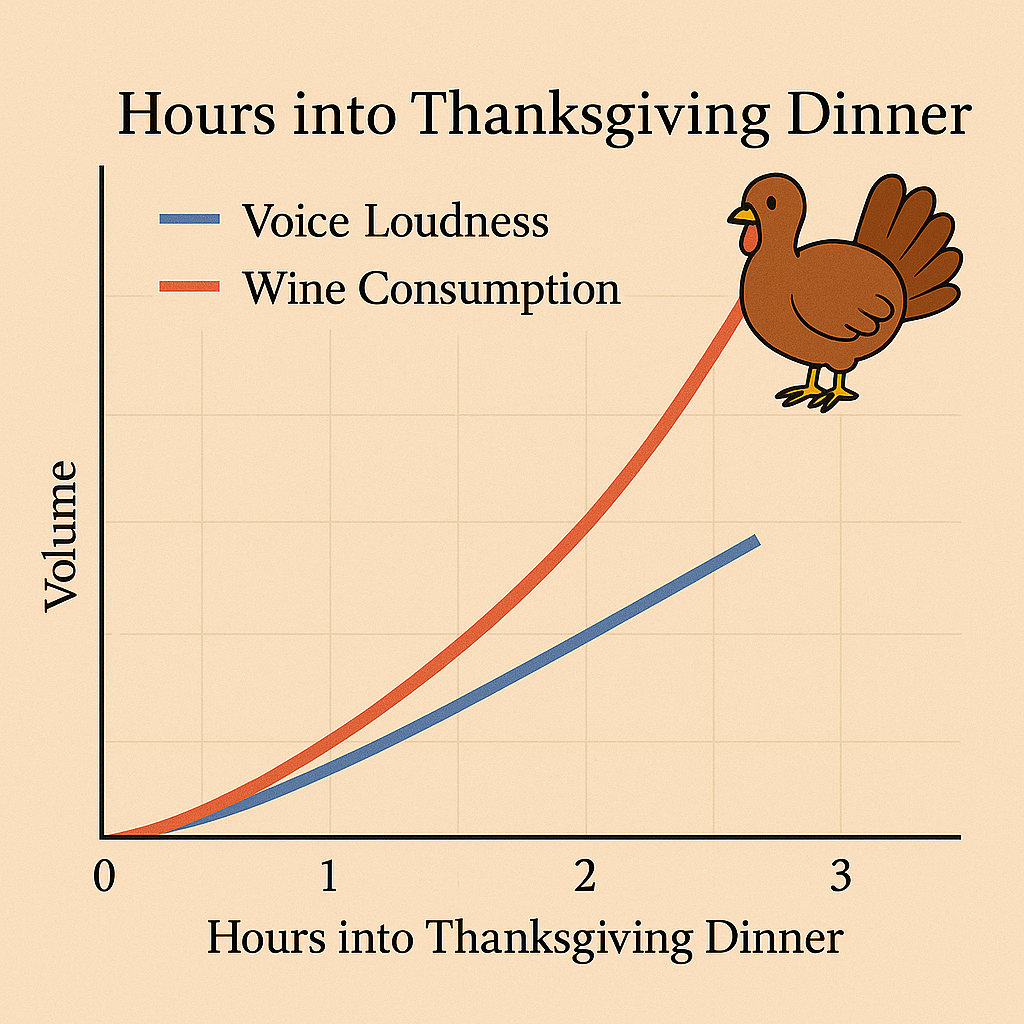
The Wine Burn Down Chart (WBDC) inevitably reveals that consumption outpaces forecasts.
The number of KPIs we’re tracking at Thanksgiving can easily grow in number but we decided to take our own advice and ensure we don’t venture into vanity metrics territory and lose focus or waste our efforts fussing over the details that ultimately don’t matter.
Keep going vs Stop doing?
Are we audacious enough to introduce a product framework into the holiday season? Would Empathy Mapping illuminate why Uncle Jerry insists deep‑frying the turkey is an innovative strategy? Could a roadmap show your spouse why assigning their newly divorced cousin the task of making the gravy will delay the entire delivery timeline? We’re still in the test-and-learn phase as we explore answers to these questions, but perhaps a parking lot could safely contain debates about several irritating topics, from cranberry sauce texture to parenting styles and something your aunt is calling ‘toddler etiquette’?
The Real Thanksgiving Mission
We’ll cut to the chase and tell you that, in our experience, none of these interventions succeed. Thanksgiving stakeholders operate on a governance model driven purely by emotion, nostalgia, and whoever speaks the loudest.
Yet despite the scope creep, the unresolved bugs, the unpredictable dependencies, and the complete lack of documentation (except for that one spreadsheet the Product Manager created but didn’t share), Thanksgiving still ships every year. The team endeavors to consistently meet its core objective: bringing everyone together, feeding them well, and generating enough warmth and pie‑powered goodwill to justify doing it all again.
Maybe that is the real insight. Even the most chaotic teams can create meaningful outcomes when the purpose is shared and the pie is plentiful.